Log Recovery Requirements
Please watch this video to see how tree trunks are loaded onto the trailer
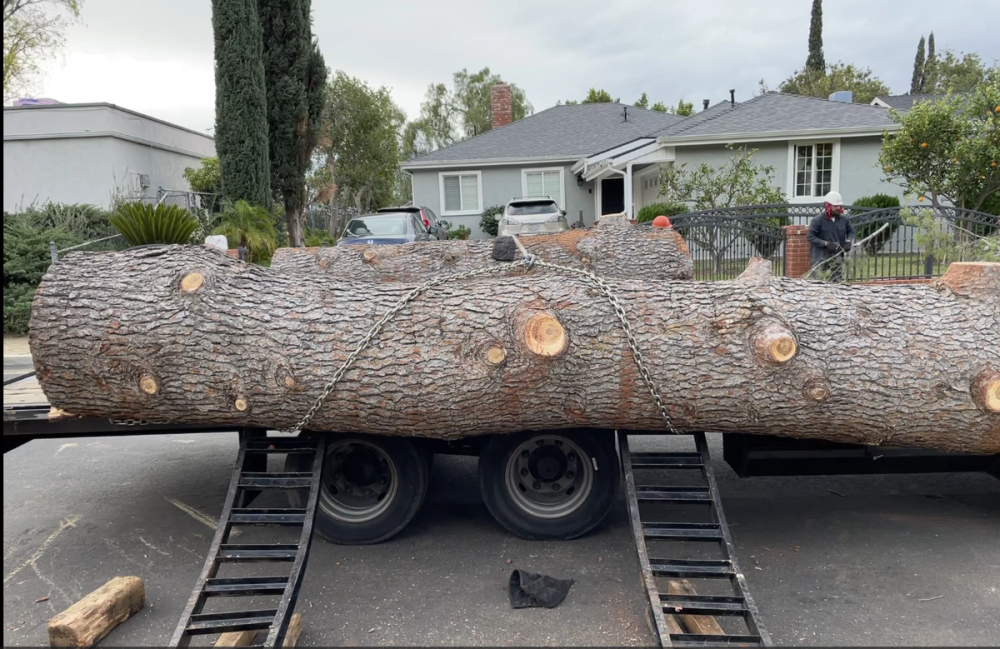
LOG RECOVERY EXAMPLES: Logs are always loaded parallel to the trailer.
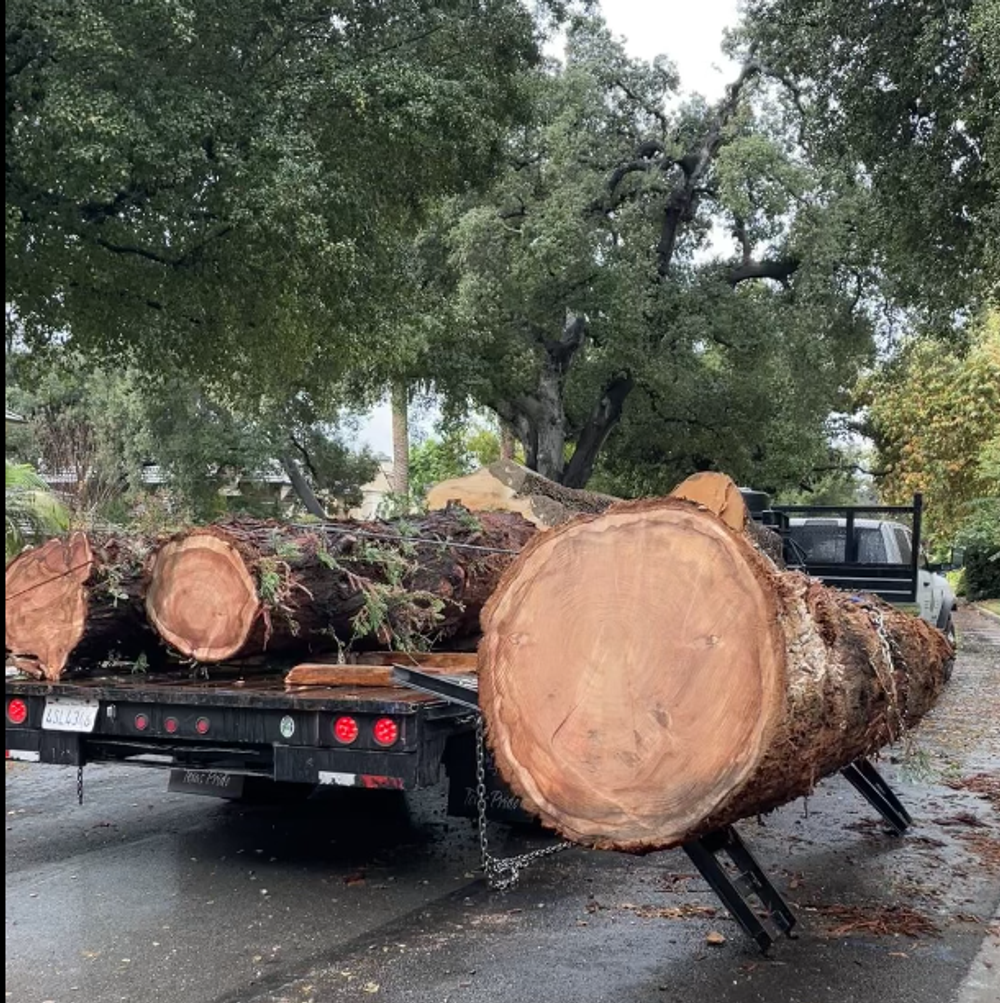
LOG RECOVERY EXAMPLES: Logs are always loaded parallel to the trailer.
Please read through the following requirements
Angel City Lumber
- Generally, the smallest end of the log with a minimum diameter of 24” across (75” circumference). We will consider smaller diameters/lengths on an as needed and species basis.
- Donations: At least 9’ long and no more than 19’ long.
- Sawmill Services & Lifecycle Projects: At least 6’ long and no more than 19’ long.
- We will not take any logs <4’ long.
- Excess bends, crooks, and rot are considered on an individual basis.
Altadena Reciprocity Project
- Generally, the smallest end of the log with a minimum diameter of 12” across (75” circumference) x 9' long (max 19’). We will consider smaller diameters/lengths on an as needed and species basis.
- We will not take any logs <4’ long.
- Minimum clearance for truck & trailer combined: 9 feet wide x 55 feet long.
- Loading area adjacent to the log should allow an additional 5 feet for the ramp and working area around the log. (20ft+ x 55ft+)
- Narrow streets and tight turns are not possible for our operator.
These are general requirements. All logs and sites are assessed on an individual basis using photos and address provided by donor or tree service and google maps street and satellite views.
- Clearance area around log for loading: 20 feet x 60 feet.
- Logs must be directly accessible or reasonably close to where ACL truck & trailer can be staged.
- Please note dragging the log would cause damage to the grass, dirt, and other landscape features.
- There cannot be obstacles (garage, shed, fences, ditches, playgrounds, plants, etc.) between logs and the truck. Any movable obstacles should be moved prior to pick up.
- Permanent obstacles may prohibit recovery altogether.
If logs are not accessible, a crane will need to be rented at cost to the owner.